
The Tayyib Alternative to the Economic Architecture of Pax Judaica
How Muslim economies – and investors – should counter the rising Israeli-aligned capital and security complex.
This piece builds on reflections in Jiang Xueqin’s commentary on Pax Judaica and draws on my earlier work on de-imperialising investment portfolios.
In most eyes, Pax Americana is dying a slow death. The nation “auditioning” to succeed it is Israel. The new version of the empire, Pax Judaica, promises to sustain the existing war-based, extraction-driven global order, but run it with greater cold-blooded efficiency.
The long record of Israeli atrocities — a continuation of evils perpetrated by colonial European and then American powers — are proof enough for the global elites. The result is the emerging economic architecture of surveillance, data control and logistics designed to preserve the dominance of western capital.
Muslim nations, who already struggle with true political and financial independence, may find it ever harder to survive this structural shift.
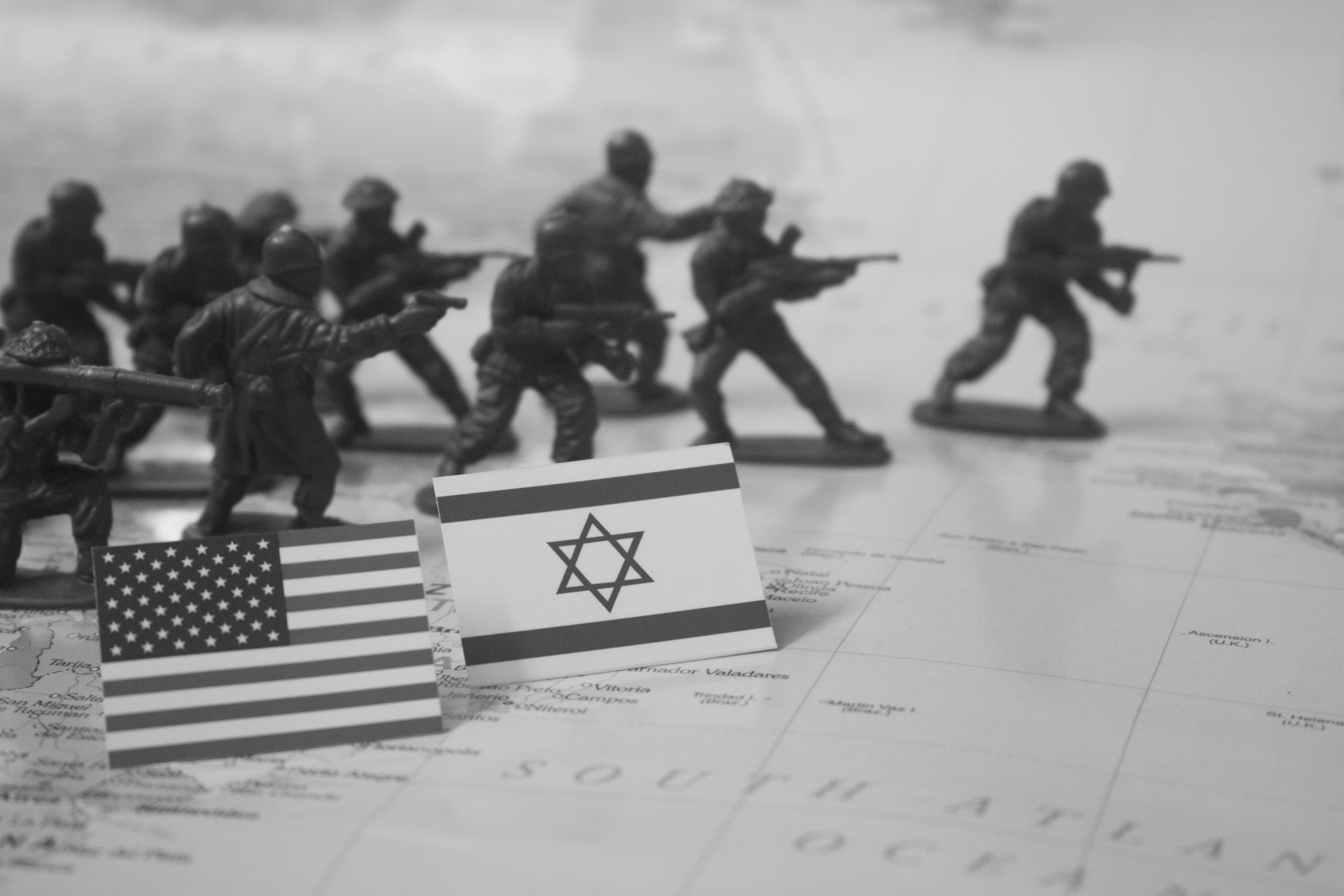
Infrastructure of empire
Unlike the incumbent Pax Americana that relies on finance (atop the powerful but irreparably corrupt military industrial complex), Pax Judaica is being built around physical and digital infrastructure (beyond sheer military might) linking Europe and east Asia via Israel.
In addition to energy control, the idea is to reroute trade and data to flow via Israeli-governed nodes around west Asia. The proposed India-Middle East-Europe Economic Corridor running through Israel and the complicit Gulf is one such channel.
Realising these ambitions would necessarily mean subordinating surrounding Arab states (which is what Greater Israel, a project already underway, envisions). If not occupied directly, they become mere transit zones subjugated by violent proxies and bound by imperial rules.
Tayyib economics
At least in theory, Muslim nations have an alternative. In the form of tayyib economics. Tayyib demands all activities to be beneficial to society, so it is inherently anti-imperialist. Its shared risk structures advance the real economy and promote the equitable circulation of wealth — in direct opposition to exploitative debt traps and concentrated power championed by empire finance.
To survive outside Pax Judaica, Muslim states must consciously build independent resilient infrastructure. This means rejecting initiatives that enforce reliance on western tech and Israeli logistics — and collaborating instead within the Global South to develop sovereign data centres, regional payment systems and logistics corridors that bypass imperial chokepoints.
Tayyib investing
Retail investors have a role to play. To align portfolios in resistance to anything empire related by applying a rigorous tayyib screen on top of basic Shariah compliance. Avoid global index funds that are indirectly funding the military-industrial complex and tech firms behind the imperial surveillance infrastructure. Avoid complicit GCC companies that are actively financing the new oppressive regional architecture.
Instead, investors should actively seek out Islamic equities and funds focused on the real economy in emerging markets. Look for tayyib opportunities in Asia, for one, within sectors like renewable energy, independent regional logistics and neutral technology. By directing capital toward local, regenerative enterprises, Muslims can bypass compromised “halal” hubs and contribute to funding a tayyib economy.
As an example, consider few tayyib-vetted clean energy stocks:
Malaysia’s Solarvest Holdings (SLVEST.KL)
Indonesia’s Pertamina Geothermal Energy (PGEO.JK)
China’s Xinyi Solar (968.HK)
Takeaway
Gaza, Lebanon, Iran “are only the beginning”. They only demonstrate how far Israel is prepared to go to secure its spot at the top. In the process of materialising, Pax Judaica will undoubtedly give way to a much more overtly ruthless global order.
Are Muslim economies ready for the challenge? Definitely not. In fact, the Ummah probably hasn’t been weaker than at any other point in Islamic history. Yet our timeless foundations are always ready to help us take a stand.
At this juncture, tayyib directs us toward economic sovereignty — a critical goal to protect populations from long-term financial coercion and surveillance capitalism. For that, capital must be intentionally redirected away from institutions that normalise or profit from imperial networks, physical or digital.
Start with simple tayyib filters (no weapons, no surveillance or occupation beneficiaries). Look for Shariah compliant funds that integrate justice, environmental stewardship and social benefit in a real way. Finally, push scholars and managers to adopt a tayyib, not just halal, lens.